
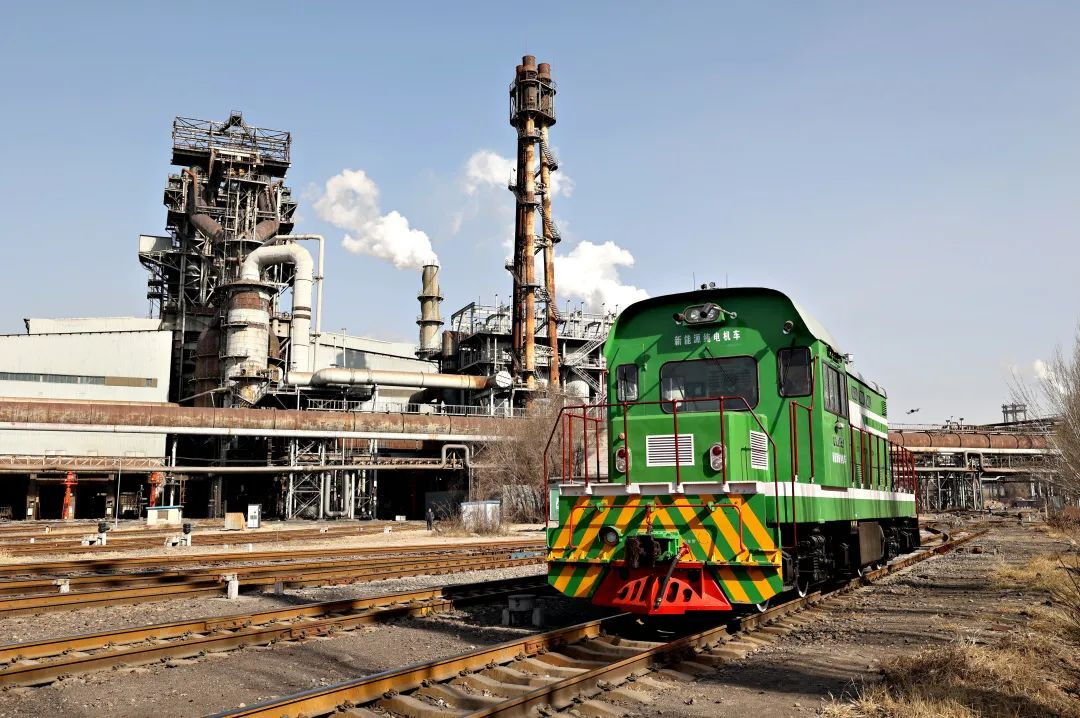
On March 13, at the Ironmaking Station of the Transportation Department, a locomotive “quietly” drove into the No. 6 Blast Furnace yard. Until it stopped, it didn’t produce a single wisp of exhaust. Without a “name” and not listed in the production roster, this seemingly “low-profile” locomotive is quite remarkable. As Baotou Steel Group’s first trial of a large-capacity pure electric new energy locomotive, it has already been operating in the plant area for 10 days. This move marks the arrival of a “pure electric” era for the railway traction power within Baotou Steel Group.
Baotou Steel Group has continuously explored the development direction of railway traction power within its plant. From the initial steam locomotives to the adoption of diesel locomotives in the 1990s, and then to August 2022 when the first oil-electric hybrid locomotive in Northwest China’s metallurgical enterprises was put into operation, Baotou Steel’s “locomotives” have been constantly upgraded. Throughout this process, locomotive traction performance and engine output power have continuously improved, while exhaust emissions have gradually decreased. In particular, the launch of the oil-electric hybrid locomotive HD0001 added “green power” (7.560, 0.09, 1.20%) to the plant’s railway transportation, representing an important measure for cleaner transport. For the past six months, locomotive HD0001 has primarily operated in pure electric mode, consistently maintaining a stable operational state of low energy consumption and minimal pollution. Based on this, the Transportation Department analyzed operational data and identified “pure electric” as the future development direction for railway traction power within the plant.
On March 3, the large-capacity pure electric new energy locomotive arrived at Baotou Steel Group. The locomotive’s battery capacity is 1,000 kWh, more than double that of HD0001; it achieves completely zero emissions during operation, making it a veritable “green locomotive”; and it is equipped with hardware access conditions for intelligent transformation, which can effectively reduce labor costs. The trial of this locomotive is a cooperative project between Baotou Steel Group and the locomotive manufacturer to jointly explore the application of large-capacity pure electric new energy locomotives in the metallurgical industry. During this period, the Transportation Department will collect data on operating experience, braking force, failure rate, battery capacity, charging time, and endurance capacity, and propose improvement suggestions; simultaneously, it will conduct theoretical and practical training for drivers and maintenance personnel of pure electric new energy locomotives. The locomotive manufacturer will address problems discovered during the trial operation based on the characteristics of in-plant railway transportation, gradually improve locomotive performance, and strive to achieve “customized” locomotives for Baotou Steel.
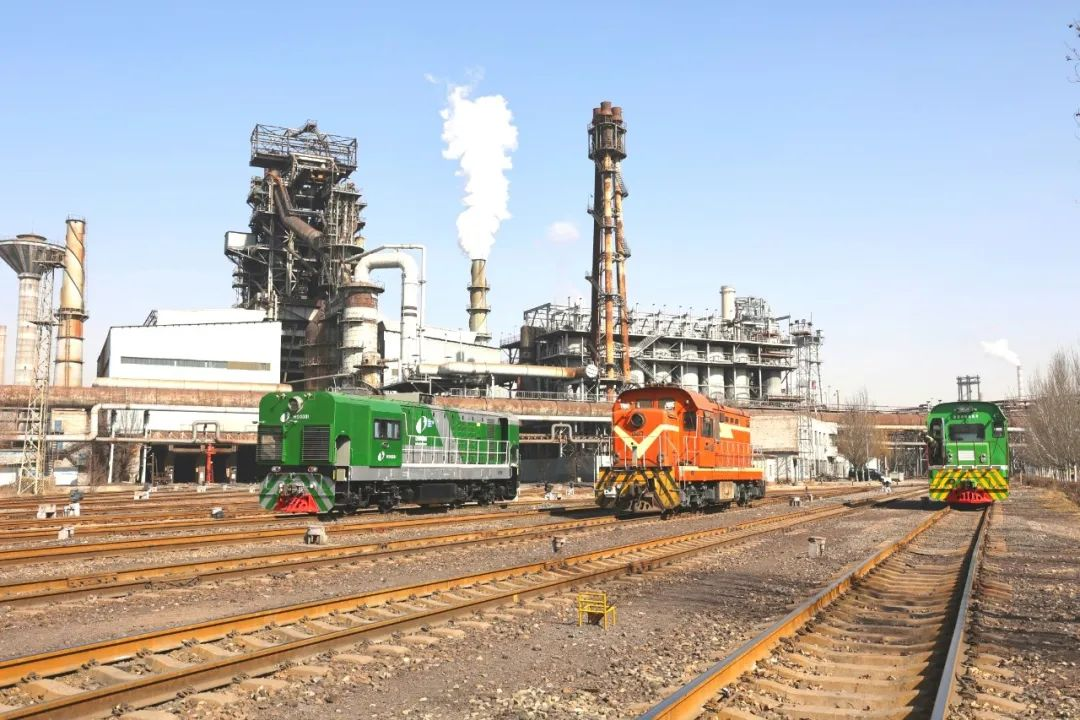
In the yard, the green pure electric new energy locomotive and the oil-electric hybrid locomotive are parked on their respective tracks waiting for signals, while an orange diesel locomotive passes between them. The image of three locomotives in the same frame demonstrates the leapfrog development of Baotou Steel’s railway transportation cause. The next step is that, with the successful design of pure electric new energy locomotives suitable for the enterprise’s production characteristics, Baotou Steel Group will retrofit existing diesel locomotives to promote the gradual entry of in-plant railway traction power into the “pure electric” era, aiming at the “dual carbon” goals and serving as a “locomotive” for energy conservation and emission reduction.

Sales Team Generator - SinoGen Marine - SeaMac Automotive - DuraMac Railways - RailMac Industrial - ConeMac Pump - PumpMac Fire - Pump - PumpMac EV System - EVMac Parts - PartMac Sales Manager - Mrs. Wendy Fu Sales Director - Mr. Jasper Lee Shipping Service


Contact EMAC Now!